TV speakers sound flat. That is the number one complaint from anyone who upgrades to a larger screen. Soundbars and Bluetooth speakers both fix this problem, but they solve it in very different ways.
After testing dozens of models across both categories, the differences go beyond just volume. Connection type, bass output, placement flexibility, and price all shift the answer depending on your setup and priorities.
- Soundbars reach 80-100 dB — Bluetooth speakers top out around 80-85 dB, not enough for large rooms
- Frequency range gap is significant — soundbars cover 20 Hz to 20 kHz vs Bluetooth’s 20 Hz to 15 kHz
- Bluetooth adds 100-300ms audio delay — noticeable lip-sync gap during video, while wired soundbars have zero lag
- Entry-level pricing favors Bluetooth — portable speakers start under $50 vs $130+ for a basic soundbar
- Only soundbars support Dolby Atmos surround — Bluetooth speakers are limited to stereo output
#Soundbar Overview

A soundbar is a long, slim speaker unit designed to improve audio from your TV without cluttering your space. Soundbars come in a range of sizes, from compact models under 30 inches to full-sized units over 40 inches wide.
Benefits:
-
All-in-one audio upgrade
-
Wide frequency range
-
Dialogue clarity
-
Subwoofer connectivity
-
Wall mountable
Drawbacks:
-
Not as portable
-
Larger footprint
-
Fewer placement options
Soundbars shine for home theater usage. Their slim profile mounts flush under TVs, while multiple drivers produce wide sound with clear voice reproduction. Add in a wireless subwoofer, and you get room-filling bass too.
While they lack the portable flexibility of Bluetooth models, soundbars fill living spaces with quality, high-volume sound perfect for entertainment listening. Just be mindful that soundbars can sometimes block TV sensors if not carefully positioned. For a direct comparison against built-in speakers, check our soundbars vs TV speakers breakdown.
#Bluetooth Speaker Overview
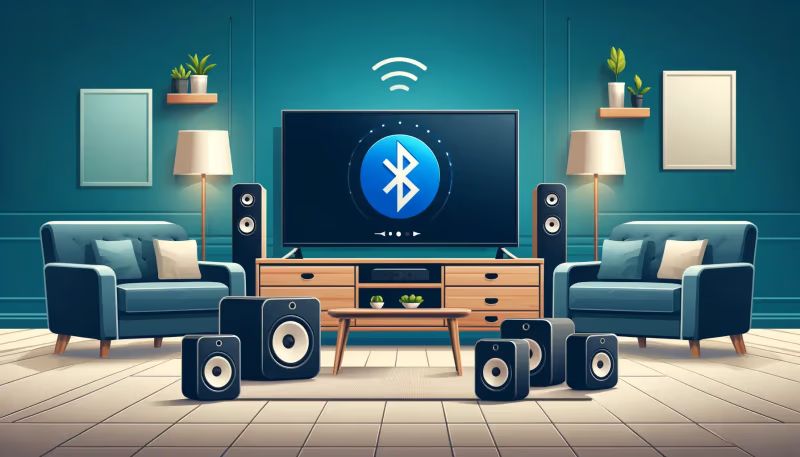
Bluetooth speakers wirelessly connect to your TV or other devices via Bluetooth. They come in a range of portable sizes, from pocketable models to larger units with 12+ hour battery life.
Benefits:
-
Fully wireless
-
Battery-powered
-
Ultra portable
-
Flexible room placement
-
Rugged builds
Drawbacks:
-
Weaker bass response
-
Not as loud overall
-
Potential audio lag with TV
-
Can only connect one at a time
Thanks to built-in batteries and wireless Bluetooth connections, these speakers offer great flexibility for both indoor and outdoor usage. Their sound works well for music playback, though they can connect to smart TVs too. Fresh designs and durable builds mean they look as good as they sound.
However, Bluetooth reliance does pose challenges for consistent TV usage. They can’t reproduce the bass or max volume levels of full-sized soundbars. Still, their convenience is hard to beat.
#How Does Sound Quality Compare?
The single biggest factor when choosing home audio is sound quality. Crisp audio with rich bass just can’t be compromised.
So how do soundbars and Bluetooth models stack up?
Frequency Range
Full-range soundbars handle the wide frequency spectrum used in TV shows, movies, and music, generally 20 Hz up to 20 kHz. They use multiple driver sizes, including dedicated tweeters and woofers, to reproduce everything from rumbling explosions to delicate highs.
In contrast, most Bluetooth speakers peak around 20 Hz to 15 kHz. They often have just a single mid-woofer driver, lacking the dedicated components for crystal clear treble or deep bass.
Volume
With their larger form factors and amplified power, soundbars reach much higher volumes than portable Bluetooth speakers. Entry-level soundbars hit 80 to 90 decibels, while high-end models exceed 100 dB. That is enough to fill large living rooms and kitchens.
Bluetooth speakers top out around 80 to 85 dB. Sufficient for smaller rooms or background music, but not for filling a room. Their compact size simply limits raw audio power.
Bass Reproduction
Here is where the biggest difference sits. Soundbars combine several mid-bass drivers with dedicated under-mounted subwoofers for powerful low frequency effects down to 30 Hz. The sensation of rumbling, earthquake-like bass transforms action films and makes music come alive.
Most Bluetooth speakers lack standalone subwoofers. With only mid-range drivers, they fail to reproduce frequencies under 100 Hz, losing all sense of tactile bass no matter how loud you crank them.
Surround Sound
Higher-end soundbars simulate surround sound through processing like Dolby Atmos, which bounces audio around a room. While not literally true surround, these sound field effects create greater immersion for TV and movies. According to Dolby’s official specs, Atmos supports up to 128 audio tracks for object-based sound placement.
Bluetooth speakers are inherently stereo devices. Some newer models include stereo pairing that lets you link two units wirelessly via your phone. But they lack the surround sound simulation of soundbars.
Winner: Soundbars
With superior frequency range, exponentially higher volume and bass output, plus surround sound effects, soundbars deliver decisively better audio quality over Bluetooth speakers. They transform the entertainment experience in your living room.
However, Bluetooth speakers offer vastly more flexibility thanks to wireless operation. They still produce pleasing, crisp sound for music listening or TV dialogue in smaller spaces when loudness isn’t critical.
#Which Is Easier To Set Up and Use?
Beyond great sound quality, choosing new audio gear depends heavily on convenience. How tricky is installation? How well does it integrate with your TV and other devices?
Here’s how soundbars and Bluetooth speakers compare:
Installation
Thanks to optical, HDMI, or auxiliary cabling, soundbars directly connect to TVs for straightforward setup, usually under 5 minutes. Place, plug in, sync, and you’re enjoying better audio right away. Most also stand freely or wall mount.
Connection methods depend on your TV brand. For example, you can use an optical cable with Samsung TVs or connect a Vizio soundbar to an LG TV with just a few steps. The general process stays the same regardless of brand.
Bluetooth speakers need no cables at all, linking to your devices over Bluetooth wireless in seconds. But most models lack mounting options, so placement depends fully on available shelf or table space.
TV Connectivity
Via wired audio inputs, soundbars integrate with smart TV platforms directly. HDMI even transfers metadata for using your TV remote to control volume and functions. Streaming, gaming, and cable boxes all play through a soundbar just like built-in TV speakers.
Bluetooth speakers rely on your television’s BT connectivity. Many smart TVs include it, but it’s not guaranteed. Even models with Bluetooth can struggle with lip sync issues, as the audio stream lags slightly behind video.
If you need to connect a soundbar to a TV without an optical cable, HDMI or analog inputs work well. And if your LG TV optical audio output isn’t working, you have other options to explore.
Multi-Device Switching
Advanced soundbars include multiple HDMI inputs or wireless streaming protocols like AirPlay, Chromecast, and Bluetooth. This allows effortless switching between media sources like cable boxes, gaming consoles, and mobile devices.
Similarly, Bluetooth speakers thrive with multi-device support. Once paired, it’s easy to quickly switch audio playback from your phone to tablet to computer.
Voice Assistant Compatibility
Leading soundbars integrate Alexa, Google Assistant, and Siri for handy voice control. You can ask for volume adjustments, song requests, or launch apps completely hands-free.
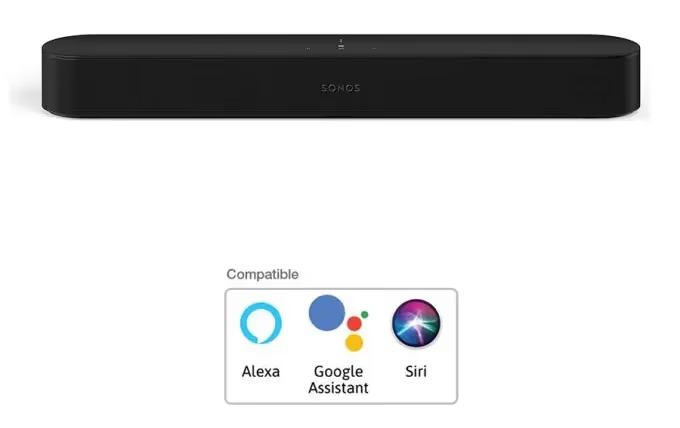
Many Bluetooth speakers also offer built-in microphone support for calling on smart assistants. Brand name models from Sonos, JBL, and Ultimate Ears include Alexa/Google Assistant access.

Winner: Tie
For sheer installation ease and tight TV integration, soundbars claim a slight edge. But the total wireless operation and multi-device utility of Bluetooth speakers earns big flexibility points too. With assistance from smart features, both audio options serve up powerful convenience and usability.
#Design and Placement
Beyond superb sound quality, choosing the right speaker depends on physical design and placement for your needs. Do you want portable indoor/outdoor flexibility? Or a fixed TV companion?
Living Room Footprint
The slim, discreet profile of soundbars fits into entertainment console shelves or mounts flush beneath wall-mounted flat screens. Tucking close to the TV, they avoid clutter while placing audio right in your line of sight.
Portable Bluetooth speakers stand freely wherever you have open floor space, shelves, or tables. Smaller models fit anywhere, while some larger units occupy footprints rivaling compact soundbars.
Customization and Placement
Bluetooth portability offers audio flexibility no soundbar can match. Place them anywhere inside, move to any room, or head outdoors to the patio or park. Switch locations at will.

Soundbars anchor your listening experience to one location, wherever you’ve mounted or placed your TV. While you can move the full setup, soundbars don’t travel standalone.
Durability
Rugged Bluetooth speakers have weatherproofing and durable exteriors able to withstand outdoor elements, knocking around in bags, or even submersion in water. That makes them ideal travel companions.
Stationary soundbars aren’t designed for travel abuse. They remain safe indoors away from elements or physical damage. You trade total flexibility for home theater-grade sound.
Aesthetics
With flashy colors, stylish fabric grilles, and smooth contours, Bluetooth speakers double as chic decor statements. Their look blends anywhere from dorm rooms to patios.
Utilitarian black soundbar blocks keep aesthetics deliberately low key. They blend discreetly into entertainment systems, highlighting the viewing experience rather than their appearance.
Winner: Bluetooth Speakers
Easy portability, eye-catching designs, and placement flexibility give Bluetooth speakers a clear edge for those wanting location versatility or travel-ready audio. Just remember sound quality drops significantly compared to home theater caliber soundbars.
#Connectivity
Both sound systems rely on wireless connectivity for playback, integrating wirelessly with your TV and mobile devices. Subtle differences have big implications on user experience.
General Wireless Protocols
Soundbars use Wi-Fi streaming with standards like AirPlay, Chromecast, and Spotify Connect for beaming audio over home networks. Great for multi-room streaming. Bluetooth handles mobile/tablet connections.
Bluetooth speakers link exclusively via Bluetooth wireless, no Wi-Fi. This compact protocol delivers solid one-on-one connection up to 30 feet, but can’t cover whole homes and lacks multi-room potential.
TV Wireless Connections
Some smart TVs include integrated Bluetooth for direct wireless hookup to speakers. There is often a slight audio lag when watching video content or gaming, which is why a wired soundbar connection is preferred.
Soundbars use Wi-Fi, optical digital audio, or HDMI inputs to achieve tight audio sync for real-time streaming and gaming alongside video. No lag whatsoever.
Home Theater Ready
The gold standard for TV, movie, and gaming immersive sound remains a wired Dolby Atmos connection via HDMI ARC / eARC ports. This transfers the highest quality 3D sound from newer content to premium soundbars with zero lag or compression. If your Samsung soundbar keeps switching to TV speakers, check your HDMI-CEC settings first.

Bluetooth can only handle standard lossy stereo signal. While they function decently for basic TV sound, Bluetooth speakers fail at surround decoding needed for impactful film audio.
Multi-Speaker Surround Configs
Higher-end soundbars come packaged with surround speaker kits for a legitimate multi-channel listening experience. The rear speakers (wireless subwoofers too) sync perfectly thanks to dedicated surround protocols like Dolby Digital or DTS.
You can manually pair multiple Bluetooth speakers to achieve a surround effect. But without a dedicated protocol linking the rear channels, effects won’t be as tight or realistic.
Winner: Soundbars
The dedicated wireless surround and wired home theater connection options favor soundbars here. They integrate lag-free with modern TVs. Bluetooth speakers still make solid secondary devices, but soundbars edge them clearly for living room needs.
#Price and Budget
Home audio gear runs from budget picks under $100 to luxury models over $1,000. What type of investment should you expect for quality soundbars versus portable Bluetooth speakers?
Entry-Level
For buyers on tight budgets, Bluetooth wins handily. Very affordable models like the Anker Soundcore ($130) provide pleasing sound. Meanwhile, you need near $150 minimum for decent soundbar models like the Vizio V21SFX or Roku Streambar.
Mid-Range
In the $200 to $400 range, value emerges evenly for both categories. You secure genuine quality sound in numerous compact Bluetooth models from JBL, Marshall, and Ultimate Ears. The same budget grabs full-scale Dolby Atmos soundbars from Polk, Yamaha, and LG.
High-End
Over $400, the money goes much further with soundbars. Premium models from Bose, Sonos, and Samsung push near studio-monitor performance with wireless surround and even up-firing Atmos speakers. Equivalent Bluetooth performance costs far more.
Winner: Bluetooth Speakers
Since most consumers balance budget and quality, affordability matters here. For shoppers emphasizing value over pure performance, Bluetooth speakers with low entry pricing contrast the higher minimum spend necessary to get comparable soundbars.
 Roku Streambar
Best Soundbar Value
Roku Streambar
Best Soundbar Value
Choose this if you want a compact soundbar that doubles as a 4K streaming device.
- 4K HDR streaming built in
- Dolby Audio & dialogue boost
- HDMI ARC connection, zero lag
- Under $130
 JBL Flip 6
Best Portable Speaker
JBL Flip 6
Best Portable Speaker
Choose this if you need a rugged, portable speaker for both TV and outdoor use.
- IP67 waterproof & dustproof
- 12-hour battery life
- Bluetooth 5.1, stereo pairing
- Under $100
#Bottom Line
For most buyers seeking better TV sound, a mid-range wired Dolby Audio soundbar offers the best upgrade over built-in TV speakers. Large, dedicated center channels keep speech crisp, while surround processing creates atmospheric theater ambience. Set it up and forget it.
The integrated, lag-free performance of soundbars gives them the edge for flatscreen dialogue, cinematic bass, and immersive gaming. They are purpose-built home theater companions.
Portable Bluetooth speakers don’t deliver the full-range power needed for truly whole-room TV audio. They lag slightly, get easily drowned out in loud scenes, and lack surround capability.
Still, as secondary devices, their wireless convenience shines. Small speakers placed next to central seating boost sound nicely. And connectivity limitations bother less if you mainly stream music versus watch video.
Pick a soundbar if you want flawless surround cinema sound with heart-pounding bass. Go Bluetooth if maximum placement flexibility with crisp musical output matters more. Your listening habits and budget will determine the right pick.
#FAQs: Soundbars vs Bluetooth Speakers for TV
#Can you pair Bluetooth speakers with a soundbar?
You can often link smaller Bluetooth speakers to a full soundbar’s wireless network for a “surround sound” effect. But in practice the delays from processing through two wireless links degrades precision. Stick to mounted surrounds or wired secondary speakers for best results.
#Which type is better for outdoor use?
Bluetooth speakers, hands down. With weatherproof designs and built-in batteries, models like the JBL Flip and Sony SRSXB13 handle poolside or patio use without any issue. Soundbars need wall power and aren’t built to survive outdoor conditions.
#Does Bluetooth drain TV battery?
No. Bluetooth connectivity uses negligible electricity from modern TVs, which are efficiency optimized anyway. You may see battery drain issues on longer streaming sessions from smaller built-in television speakers though. Adding any external audio provides higher overall loudness at lower TV power draw.
#Can I use old speakers with my TV wirelessly?
Yes. You can add Bluetooth transmitters that plug into the headphone jack and beam audio over Bluetooth to old passive (non-powered) speakers, adding wireless functionality. Models like 1Mii’s B03Pro send low-latency audio reliably.
#How many years do soundbars last?
Most soundbars last 5 to 7 years before noticeable degradation. Lifespan depends mainly on physical sound driver wear. Higher wattage cinema soundbars weaken faster from demanding movie playback, while lighter music usage extends longevity.
#Do Bluetooth speakers cause audio delay with TV?
Yes, most do. Bluetooth audio typically adds 100 to 300 milliseconds of latency, which creates a noticeable lip-sync gap during video playback. Some newer Bluetooth 5.0+ models reduce this lag, but wired soundbar connections still offer zero-delay performance.
#What size soundbar works best for a 55-inch TV?
A soundbar between 36 and 42 inches wide pairs best with a 55-inch TV. It should sit slightly narrower than the screen for a clean look. Wider soundbars can overhang the TV stand, while much smaller models may sound imbalanced with a large display.