When it comes to buying an affordable yet high-performing TV, Onn and TCL are two great options to consider. But which budget TV brand is better? We’ll break down the key differences between Onn and TCL TVs across 10 categories to help you decide which is the best fit for your needs and budget.
- TCL wins 8 out of 10 categories — including picture quality, brightness, contrast, motion handling, and color accuracy
- Onn TVs start at $100 to $250 — making them one of the cheapest branded TV options available at Walmart
- TCL QLED models hit 600+ nits — roughly 2.5x brighter than Onn’s 250-nit peak, a major advantage in well-lit rooms
- Both brands run Roku TV — but TCL also offers Google TV with built-in Google Assistant on higher-end models
- TCL’s 120Hz panels reduce motion blur — while Onn sticks with 60Hz across its entire lineup
#Overview of Onn and TCL TVs
Onn TVs are exclusive to Walmart, making finding troubleshooting information and resolving issues tricky compared to more well-known brands.
TCL is an established Chinese electronics manufacturer known for its affordable yet quality TVs. TCL TVs offer better technology and more features than Onn at a slightly higher price point.
Below we dig deeper across 10 key factors to compare Onn vs TCL TVs.
#What Panel Technology Does Each Brand Use?
Onn TVs use basic DLED panel technology which stands for Direct LED. This means LEDs are directly behind the screen rather than along the edges.
In contrast, TCL TVs utilize more advanced panel technology:
-
QLED: Quantum dot LED panels found in higher-end TCL models provide wider color gamuts and brightness compared to standard LED panels.
-
Mini-LED: Found in TCL’s premium TVs, mini LED backlights offer more precise dimming control compared to standard LED backlights.
Winner: TCL for its more advanced quantum dot and mini LED panels.
#Image Processing
Onn TVs have basic Amlogic processors suitable for everyday viewing but lack advanced upscaling capabilities.
TCL TVs come equipped with the AiPQ Engine processor providing crisp image quality and excellent HD-to-4K upscaling.
Winner: TCL for its stronger AiPQ image processor optimized for 4K clarity.
#Motion Handling
Onn TVs have decent 60Hz refresh rates. While fine for most content, fast action scenes can exhibit some motion blur.
Many TCL TVs feature 120Hz refresh rates combined with motion enhancement technology, reducing blur in action scenes.
Winner: TCL for faster refresh rates and better motion handling capabilities.
#Contrast and Dimming
With direct LED backlights lacking local dimming capabilities, Onn TVs produce mediocre contrast ratios. This can result in blacks appearing grayish rather than deep black.
Higher-end TCL TVs utilize full array LED backlights with local dimming to produce markedly better native contrast ratios for deep, inky blacks.
Winner: TCL TVs with full array local dimming achieve superior contrast.
#Peak Brightness
Most Onn TVs peak at around 250 nits brightness which is rather dim and unsuitable for well-lit rooms.
Thanks to quantum dot technology in its QLED TVs, TCL achieves 600+ nit peak brightness for great high dynamic range (HDR) performance even in bright rooms.
Winner: TCL TVs are much brighter, especially QLED models.
#Which Brand Produces Better Colors?
Onn TVs produce decent but unremarkable colors lacking vibrancy. HDR color performance is also underwhelming.
The AiPQ processor in TCL TVs enables over a billion color combinations for rich, accurate colors in SDR and HDR content. Wide color gamuts in QLED models produce especially detailed, nuanced colors.
Winner: TCL TVs produce much more accurate and lifelike colors.
#Viewing Angles
Neither Onn nor TCL offer very wide viewing angles of more than 20-30° off center axis. Colors start washing out and contrast reduces when viewing from sharper angles.
Among the two, TCL generally maintains better color and contrast at wider angles up to around 30 degrees. But neither match viewing angles achieved by OLED TVs.
Winner: TCL by a slim margin but poor viewing angles remain an LED panel limitation for both.
#Audio Quality
Onn TVs contain basic speaker systems producing mediocre, tinny sound. While sufficient for casual TV watching, external speakers are recommended for an immersive experience, especially for movies. External speakers may be needed to boost Onn TV audio quality as the basic integrated speakers can produce mediocre, tinny sound.
TCL boosts audio performance in many models with Dolby technology. Soundbars are still recommended but audio quality is slightly better than Onn models.
Winner: TCL has the audio edge but external speakers still advised for both.
#Smart TV Platform
Both Onn and TCL TVs utilize the user-friendly Roku TV operating system packed with thousands of streaming apps.
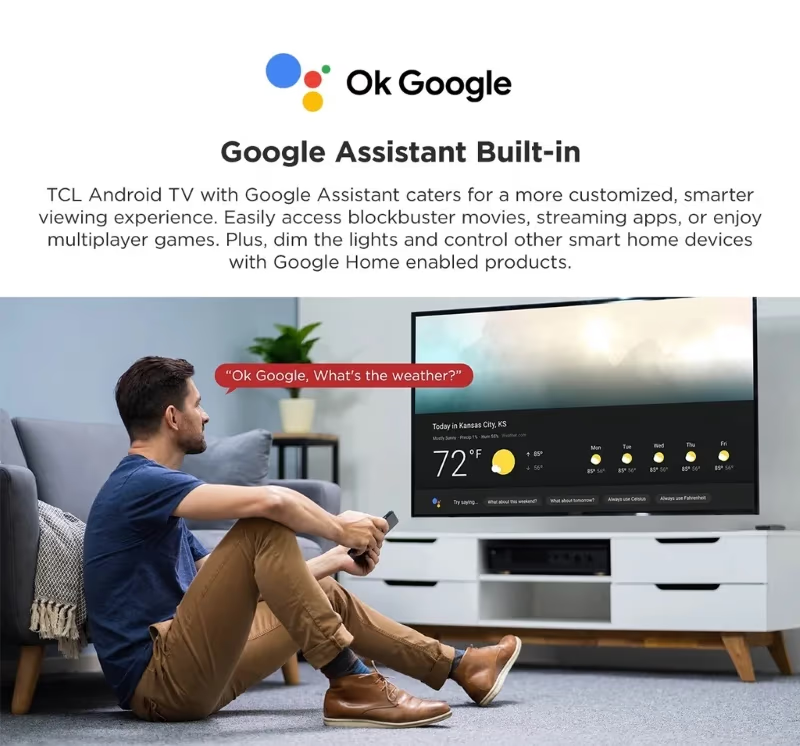
Some higher-end TCL models come with Google TV featuring voice control via Google Assistant along with Chromecast built-in for easy screen mirroring.
Onn TVs utilize the user-friendly Roku TV operating system but have faced connectivity issues and app errors.
Winner: It’s a tie. Both TCL’s Roku TV and Google TV interfaces work great.
#Price
Without extra features or frills, Onn basic LED TVs start at just $100 to $250 for 32 to 55-inch 4K models. That makes Onn one of the cheapest branded TV options on the market.
TCL 4K LED TVs range from $200 to $1,000 depending on size and features. While pricier than Onn, they deliver much better picture quality and technology for the money. Brand name recognition for TCL also helps resale value.
Winner: Onn wins on sheer bargain pricing but TCL offers far better value per dollar spent.
#Bottom Line
TCL is the clear winner over Onn TVs across the majority of comparison categories focused on display performance and features.
If you’re on an ultra tight budget, an Onn TV can get the basic job done. But we highly recommend increasing your budget slightly to get a far superior viewing experience from TCL’s affordable TVs.
TCL provides much better all-around performance, picture quality and smart features compared to Onn for a very reasonable bump in price. Plus better brand reputation and resale value down the road.
#Advantages of TCL over Onn
-
Far better display specifications including QLED and mini-LED panels, full array local dimming, Dolby Vision HDR support
-
Significantly higher peak brightness levels, especially on QLED models
-
Vastly improved native contrast ratio thanks to local dimming
-
Superior color accuracy and wider DCI-P3/Rec 2020 color gamut coverage
-
Better motion handling with faster 120Hz refresh rates
-
More advanced AiPQ video processor for outstanding 4K upscaling
-
Slightly better audio quality and volume output
-
Option for Google TV on higher-end units with integrated Google Assistant
While Onn works fine for secondary rooms on a tight budget, we strongly recommend TCL TVs for better performance at reasonable prices that will noticeably improve your viewing experience.
Remote control problems can also arise, though Onn TVs don’t include advanced capabilities needing complex controls.
#FAQs: Onn vs TCL Comparison
#Is TCL the parent company of Onn?
No. Onn is an electronics brand exclusive to Walmart. TCL is a separate Chinese manufacturer best known for its value-packed TVs.
#What display technology do Onn TVs use?
Most Onn TVs utilize basic direct LED backlight technology lacking advanced capabilities such as local dimming.
#Do Onn TVs support HDR?
Some Onn models support basic HDR10 high dynamic range but generally don’t get bright enough to truly benefit HDR content. They lack more advanced HDR formats like Dolby Vision supported on higher-end TCL TVs.
#Are Onn TVs good for gaming?
Onn TVs work reasonably well for casual gaming but TCL is much better for serious gaming. Onn models lack gaming-centric features like Auto Low Latency Mode or variable refresh rate. TCL TVs possess dedicated Game Modes reducing input lag to very low levels, making them great for fast-paced action games.
#Why are TCL TVs priced higher than Onn?
The higher prices of TCL TVs reflect far more advanced display specifications and premium features compared to barebone Onn models. You get what you pay for — TCL TVs deliver strong picture quality for the price.
#Can you wall-mount both Onn and TCL TVs?
Yes, both brands support standard VESA wall mounts. Check your specific model’s VESA pattern (usually 200x200 or 400x400) before buying a mount.
#How long do Onn and TCL TVs typically last?
TCL TVs generally last 5 to 7 years with regular use, thanks to higher-quality components. Onn TVs can last 3 to 5 years, though longevity depends on usage patterns and whether the TV runs in a well-ventilated space.