A home theatre power manager protects your AV equipment from voltage spikes, power surges, and electrical noise that can degrade performance or cause permanent damage. Even a modest setup with a receiver, TV, and a few media sources benefits from proper power management.
This guide covers the difference between surge protectors and power conditioners, the features that matter most, and four field-tested product picks for every budget.
- Surge protection alone is not enough — power conditioners also filter EMI/RFI noise that degrades picture and sound quality
- Look for at least 2000 J surge rating — high-end systems should target 5000 J or more for full protection
- Eight outlets is the minimum — larger systems need 12+ outlets with isolated filter banks
- Automatic voltage regulation (AVR) handles brownouts — some units correct swings from 80V to 140V back to a steady 120V
- Reputable brands like Furman and Panamax — offer 5-year or lifetime warranties and proven track records
#What is a Home Theatre Power Manager?
A home theatre power manager is a device that regulates the power supply to your AV system components. While many people are familiar with surge protectors, a power manager goes further by combining surge protection, noise filtering, and voltage regulation into a single device that standard power strips can’t match.
#Surge Protection vs Power Conditioning
The terms “surge protector” and “power conditioner” are often used interchangeably, but they actually serve distinct purposes:
-
Surge protectors guard against sudden spikes in voltage that can fry circuit boards, power supplies and other electronics. Any surge protector worth using will have a Joule rating that specifies how much energy it can absorb before failing.
-
Power conditioners do more than just protect against surges – they also filter out electromagnetic and radio frequency interference (EMI/RFI). This “noise” can come from other electronics in your home, power lines, or even lighting and degrade AV performance. By delivering “clean” power to your equipment, power conditioners ensure you see and hear your content as the creators intended.
The best home theatre power managers integrate both surge protection and power conditioning, letting you check both boxes with a single device. Some high-end units even feature voltage regulation to maintain a steady supply during brownouts.
#Why Does Every Home Theatre Need a Power Manager?
Think of a power manager as an insurance policy for your home theatre gear. Here are three key reasons to use one regardless of your system size or budget:
#Protect Expensive Equipment
AV gear is a significant investment, with even entry-level receivers and TVs costing hundreds of dollars. High-end components can easily run into five figures.
Power surges can cause critical damage in an instant, frying delicate circuits. Over time, smaller non-catastrophic surges slowly degrade internal components, shortening lifespan.
Using a surge protector is the bare minimum, but a power manager with integrated line conditioning provides full protection against surges, noise, and voltage sags.
#Ensure Optimal Performance
Unconditioned power can introduce noise and artifacts into picture and sound. This interference robs your system of its full potential, resulting in muddier audio and images that lack detail and pop.
By scrubbing line noise and ensuring optimal voltage delivery, power conditioners provide a blank canvas for your AV components to shine. You’ll enjoy better black levels, enhanced sharpness and color accuracy, and a more immersive soundstage.
If you’ve invested in a 4K TV, projection system or premium speakers, don’t undermine them by skimping on power. To get the most out of your display, consider connecting your soundbar to the TV or adding external speakers for even better audio performance.
#Extend Component Lifespan
The sensitive electronics inside AV components are particularly vulnerable to damage from electrical anomalies and noise. These issues may not cause immediate failure but inflict cumulative harm that shortens the useful life of your gear.
Power conditioners with strong surge protection and EMI/RFI filtering shield against this progressive degradation. With proper power management, your equipment will perform at its best for longer, letting you maximize your AV investment.
#Key Features to Look for in a Home Theatre Power Manager
Now that you understand the “why” of power management, let’s examine the “what”. Here are the most important features and specs to consider when comparing your options:
#Sufficient Power Outlets
Make sure the power manager you choose has enough outlets to accommodate all your components with room for future expansion. For most home theatres, eight outlets is the minimum recommendation.
#Effective Noise Filtration
Verify that the power manager uses noise filtering technologies designed for AV equipment. Look for units with isolated filter banks that prevent noise generated by one component from contaminating the others.
#Automatic Voltage Regulation
For maximum protection, choose a power manager with automatic voltage regulation (AVR). AVR ensures a steady supply of 120V power during sags and brownouts. Some models can correct voltage swings as wide as 80V to 140V.
#High Joule Rating for Surge Protection
The Joule rating specifies how much energy the surge protector can absorb before failing and is a critical spec to compare. For home theatres, look for a Joule rating of at least 2000 J. Higher-end models like those from Furman and Panamax may offer 5000 J or more.
#Rack-Mountable Design
If your home theatre uses an equipment rack, opt for a rack-mountable power manager for easy integration and a clean look. For smaller systems or tight spaces, compact designs are available that support shelf or wall-mounting.
#Reputable Brand and Warranty
Stick with established brands known for quality power management solutions like Furman, Panamax, Tripp Lite, and APC. Premium models may cost more upfront but provide better performance and longer lifespans.
Pay attention to the manufacturer’s warranty as well. The top brands stand behind their products with strong 5-year or longer warranties.
#Our Top Home Theatre Power Manager Picks
With those key considerations in mind, here are my top power manager recommendations to suit a range of system needs and budgets:
#Best Overall: Furman Elite-15 PF i
The Furman Elite-15 PF i is my go-to power manager for premium home theatres. It has 12 outlets, 5000 J of surge protection, and Furman’s proprietary Power Factor Technology for top-tier AC line noise filtering. An adjustable rack-mount design and lifetime warranty round out its pro-grade pedigree. While pricey, it’s a sound investment if you want the best.
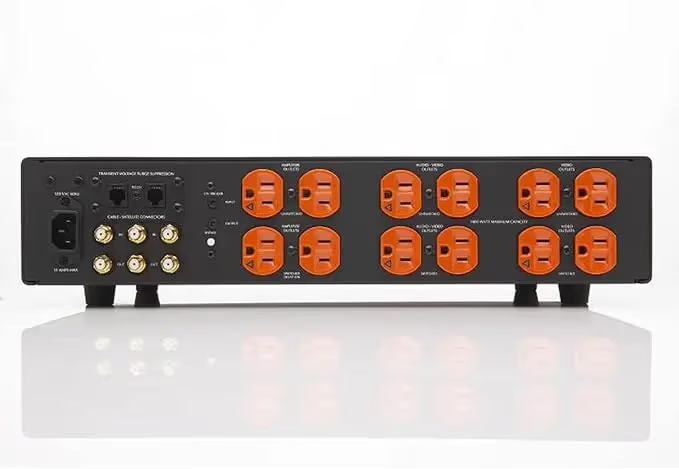
#Best Value: Panamax MR4300
For a step up from a basic power strip without breaking the bank, the Panamax MR4300 offers outstanding value. It pairs a respectable 3240 J of surge protection with Level 2 Noise Filtration for enhanced AV performance. Eight outlets provide ample capacity in a compact frame. The front-panel voltmeter is a nice touch for easily monitoring line voltage.

#Best for Large Systems: Pyle PCO860
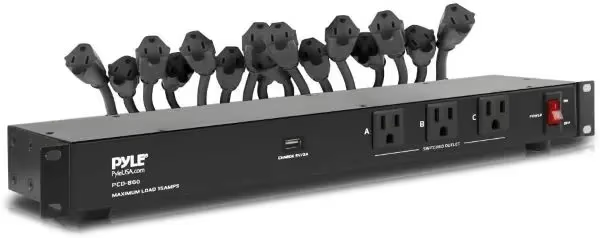
With a generous 19 outlets, the rack-mountable Pyle PCO860 can accommodate even the largest home theatre systems. Its 6000 J surge protector and EMI/RFI noise filters safeguard your gear while an aluminum chassis ensures maximum durability. Unique port-integrated LEDs provide a visual confirmation of protection.
#Best for Tight Spaces: Tripp Lite LC2400
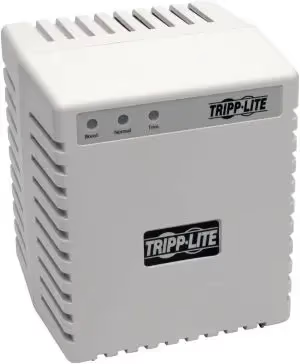
For situations where a full-size power manager won’t fit, the compact Tripp Lite LC2400 packs plenty of protection into a small footprint. Its six outlets feature 1200 J of surge suppression and isolated noise filter banks to prevent interference. Plus, integrated cord management keeps your setup looking tidy. Wall and shelf mounting hardware are included.
#Setting Up Your Home Theatre Power Manager
To get the most out of your power manager, proper setup is key. Follow these tips to maximize protection and performance:
#Placement Tips
-
Position the power manager as close to your AV components as possible to minimize cabling
-
Ensure the unit has adequate ventilation to prevent overheating
-
Avoid connecting the power manager to uninterruptible power supplies (UPS) or power strips
#Connecting Devices
-
Plug masters directly into wall outlets
-
Connect components with the highest power draw like amplifiers and subwoofers to the master unit
-
Plug line-level equipment like media players, game consoles and cable boxes into the highest-numbered banks
-
Avoid daisy-chaining other power strips off the power manager’s outlets
#FAQ
#Do I need a power manager if I already have a surge protector?
A surge protector blocks voltage spikes but does nothing about dirty power that causes audio hum and video artifacts. A power manager adds line conditioning and EMI/RFI filtering on top of surge protection. For anyone with a receiver, projector, or high-end TV, the upgrade is worthwhile.
#Can I plug my TV into a power conditioner?
Most modern TVs work fine with power conditioners, but some older displays can be sensitive to voltage correction. Check your TV manual for compatibility notes before connecting. When in doubt, plug the TV into a high-quality surge protector instead. If you want to connect older media sources, here is a guide on how to watch VHS tapes on modern TVs.
#What Joule rating should I look for?
For a typical home theatre, aim for at least 2000 Joules of surge protection. Systems with high-end components or multiple amplifiers should target 5000 Joules or higher. The Joule rating indicates how much energy the protector can absorb before it fails, so higher is always better.
#How many outlets does a home theatre power manager need?
Eight outlets is the minimum for a basic setup with a receiver, TV, streaming device, and a few accessories. Larger systems with separate amplifiers, subwoofers, and multiple media sources need 12 or more outlets. Always leave two to three spare outlets for future gear.
#Are power managers worth the cost?
The upfront cost of a quality power manager is small compared to the AV equipment it protects. Even entry-level gear performs better and lasts longer with clean, filtered power. Think of it as insurance that also improves your picture and sound quality every day.
#What is the difference between a power conditioner and a UPS?
A power conditioner filters noise and regulates voltage but does not provide battery backup during outages. A UPS (uninterruptible power supply) keeps equipment running during short blackouts but typically offers less noise filtering. For home theatres, a power conditioner is the better choice unless you live in an area with frequent power outages.
#Can I daisy-chain a power strip off my power manager?
No. Daisy-chaining power strips off a power manager defeats the purpose of isolated filter banks and can create a fire hazard. Plug each component directly into the power manager’s outlets. If you need more outlets, upgrade to a unit with higher capacity instead.
#Where should I place my home theatre power manager?
Position the power manager as close to your AV rack as possible to keep cable runs short. Make sure the unit has enough airflow around it to prevent overheating. Plug the power manager directly into a wall outlet, never into another power strip or extension cord.
#Bottom Line
A power manager is one of the most practical upgrades you can add to any home theatre. It protects against surges, filters electrical noise, and helps your equipment perform at its best for years.
Start with the Panamax MR4300 if you want solid protection without overspending, or step up to the Furman Elite-15 PF i for a premium system. Either way, make sure your unit has at least 2000 J of surge protection, noise filtration, and enough outlets for your current setup plus a few spares.
Plug your power manager directly into a wall outlet, connect your highest-draw components first, and skip the daisy-chained power strips. Your AV gear will thank you with better picture quality, cleaner audio, and a longer lifespan. If you are looking to connect external speakers to your Samsung TV or connect a soundbar without an optical cable, clean power makes a noticeable difference in audio clarity.